
For years, businesses have wanted software that fits the way they work.
They have customized applications, configured dashboards and built workflows to meet their needs. SaaS platforms made this easier by allowing businesses to change features and settings without building everything from scratch.
But AI is changing what people expect from software.
People no longer want to explain the same things repeatedly. They want software that remembers their preferences, understands their needs and helps them get things done.
This brings us to a new question:
What if software could adapt to us, instead of us constantly adapting to it?
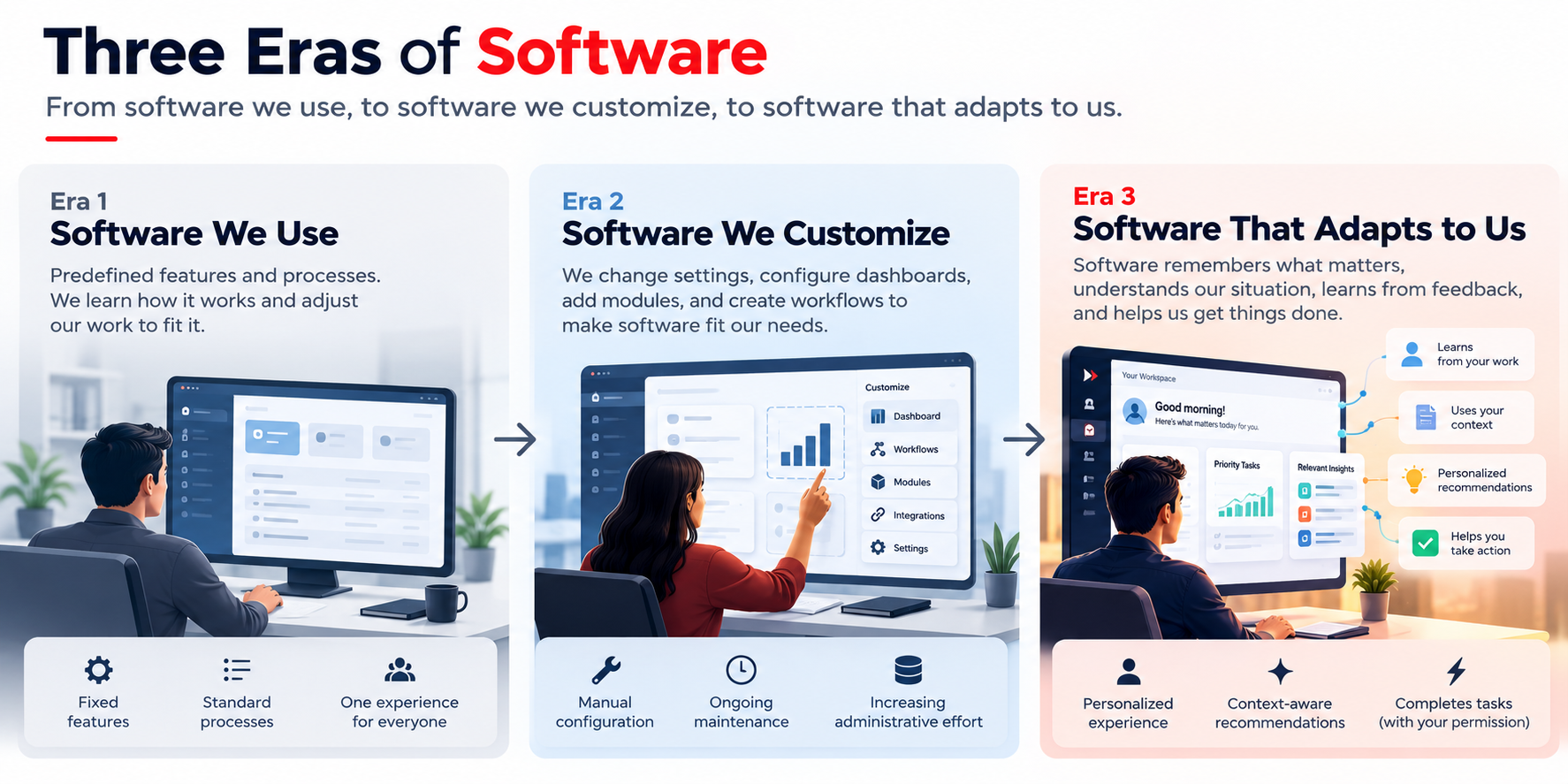
Three Eras of Software
To understand this change, let’s look at how software is evolving.
Era 1: Software We Use
Software comes with predefined features and processes. We learn how it works and adjust our work to fit it.
Era 2: Software We Customize
We change settings, configure dashboards, add modules and create workflows to make software fit our needs.
But customization comes with a hidden cost. Someone must maintain those configurations, update workflows, manage exceptions and ensure everything keeps working as the business grows.
Over time, the effort required to maintain the software can become almost as important as the value it provides.
Era 3: Software That Adapts to Us
Software remembers relevant preferences, understands our situation, learns from feedback and helps us make decisions.
Instead of relying entirely on manual configuration, it can use current data and context to adapt recommendations, personalize experiences and suggest changes as needs evolve. It can also complete tasks within the permissions we give it.
The shift is simple: we are moving from software we operate to software that increasingly understands how we work.
The Shift Behind the Shift
AI assistants and agents are changing what people expect from digital products.
People want tools that remember past conversations, understand their preferences and help them complete tasks without starting from scratch every time.
But this change is about more than adding AI to an application. It is about making software more aware of the person using it.
Consider an education platform.
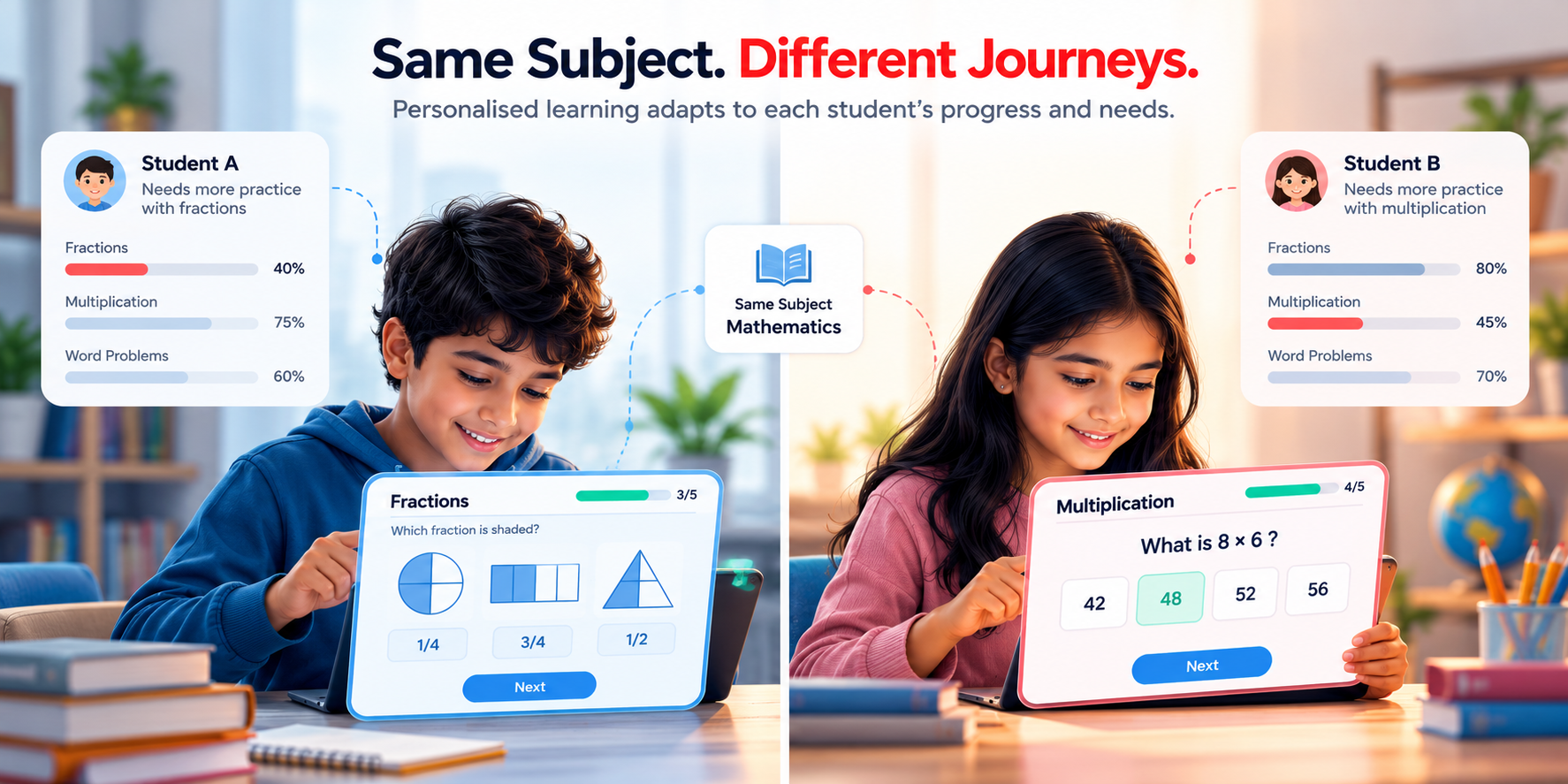
Two students are learning the same subject. One struggles with fractions, while the other needs more practice with multiplication.
A traditional platform might give both students the same lessons. A personalised platform can use their learning history to identify what each student needs and suggest different exercises. As they improve, their learning activities can change too.
The platform does more than remember their names. It uses what it knows about their progress to decide what might help them next.
The same idea applies to business software. Different people have different roles, priorities and ways of working. Software should be able to account for those differences.
This is the real shift: from software that follows settings to software that uses context to make the experience more relevant.
But how can software do this well?
Why Data and Context Matter
Personalization is not just an AI model or a chatbot. It depends on having the right information at the right time.
Let’s return to the education example.
When a student completes an exercise, the platform records the result. It connects that result to the relevant skill, considers the student’s past performance and identifies what they should practise next.
When the student completes another exercise, the system uses the new result to update its understanding.
Step by step, the platform builds a clearer picture of the student’s progress.
This is where data pipelines become important. They move information between systems, keep it up to date and make it available when needed.
The same is true for business applications. An AI assistant cannot give useful recommendations if it lacks the right business data, user preferences or information about what has happened before.
Even a powerful AI model has limits when it lacks the context needed to answer a question or take the right action.
The intelligence is not just in the AI model. It is also in the system that gives the model the right information and uses its output.
The Personalization Layer: Making Software Adapt
Data alone is not enough. Software also needs a way to turn that information into a useful experience.
This is where a personalization layer comes in.
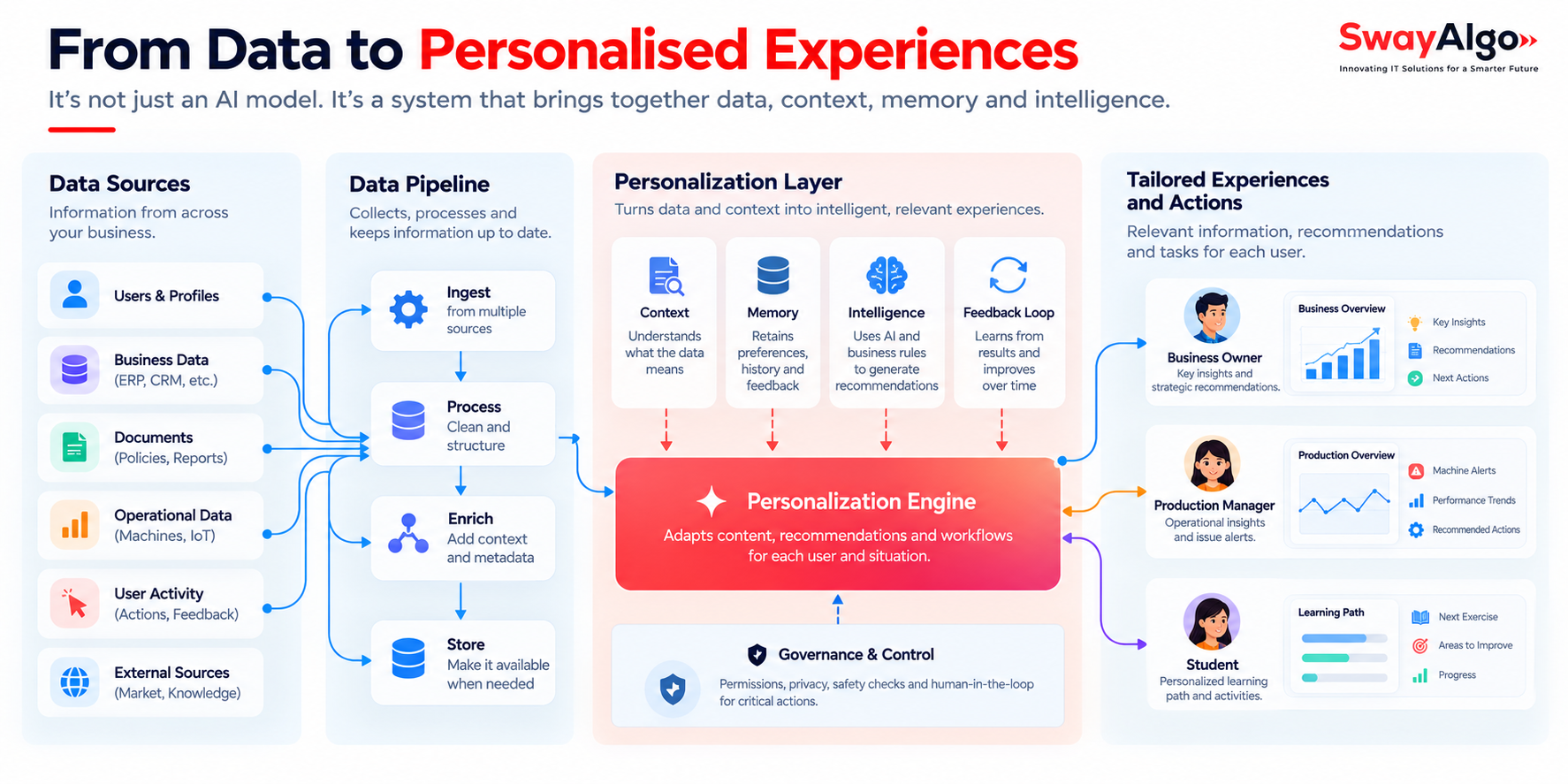
Think of it as an intelligence layer that works across an application. It uses relevant data, user preferences, past interactions and current context to decide what information to show, what to recommend and what actions might help.
For example, a business owner might want a quick overview of company performance, while a production manager needs to focus on machine downtime and output.
Instead of showing everyone the same information, the software could highlight what matters to each person. Over time, it could also use feedback to improve its recommendations.
A strong personalization foundation brings together five key capabilities:
- Data: Reliable information about users, activities and business operations.
- Context: Understanding what that information means for the current task.
- Memory: Retaining useful preferences and past interactions.
- Personalization: Using that knowledge to adapt information, recommendations and workflows.
- Feedback and action: Learning from results and completing approved tasks.
These capabilities do not have to be separate products or services. They are building blocks that work together.
The goal is not to add an AI feature to every screen. It is to make the entire application more useful.
Personalization must also be trustworthy. Software should protect private information, respect permissions, and allow users to correct mistakes. It should know when to act and when to ask for approval.
After all, software that remembers the wrong thing or takes action without permission can create more problems than it solves.
Where Are We Heading?
For businesses building SaaS products and digital solutions, this shift creates a new opportunity.
At SwayAlgo, we see this direction across business applications, manufacturing, and education. Making personalization work requires more than connecting an AI model to an application. It requires the underlying systems to provide the right information, maintain relevant context and turn AI outputs into useful actions.
Technologies such as vector databases and Retrieval-Augmented Generation (RAG) can help applications retrieve relevant information from business documents and historical records. Data pipelines keep information flowing between systems, while AI orchestration coordinates models, tools and workflows to complete tasks.
When these capabilities are designed well, they can help enterprise applications built with platforms such as ERPNext and Frappe deliver more context-aware experiences.
In manufacturing, this could help teams identify production issues and understand operational data.
In education, it could help tailor learning activities to each student’s progress.
In business applications, it could help people find relevant information, make informed decisions and complete tasks with less manual effort.
The technologies are important, but they are not the starting point. The starting point is understanding the user, the problem and the information needed to solve it.
Not every application needs an autonomous agent. What every meaningful personalization effort needs is a reliable foundation of data, context and appropriate control.
The Next Era of Software
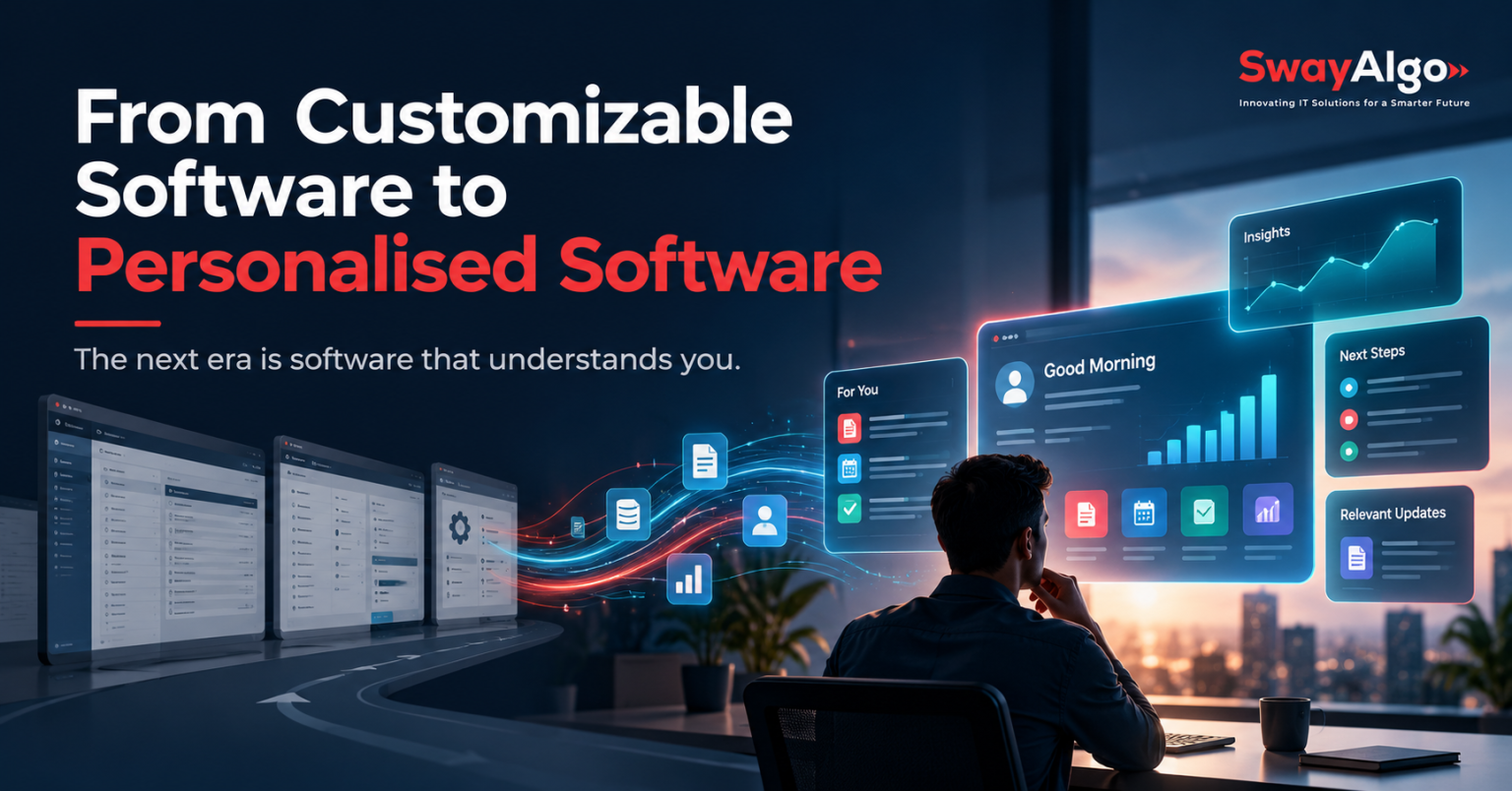
We have moved from software with predefined features to software we can customize. Now, we are moving toward software that can understand our needs, remember what matters and help us get things done.
This changes the questions businesses should ask when choosing or building software.
Instead of asking only whether a platform has enough features or configuration options, ask:
- Can it use the right information to understand the situation?
- Can it retain relevant context and preferences over time?
- Can it adapt as needs change without creating more maintenance work?
- Can it help people achieve their goals while keeping them in control?
Customization made software fit our requirements. Personalization aims to make software understand our needs.
The next evolution of software will not be defined by how much we can configure, but by how intelligently it can use context to help us move forward.
And making that possible requires more than AI. It requires the data pipelines, memory, context and intelligence layers that connect everything.
At SwayAlgo, we believe this is an important direction for building the next generation of business applications: software designed not just around features, but around the people who use them.